
Struggling to fall asleep, waking up several times during the night, or feeling tired even after spending enough time in bed can affect almost every part of your day. Poor sleep can leave you low on energy, make it harder to concentrate, affect your mood, and reduce your ability to recover from physical activity.
If you’re wondering how to get better sleep, the answer usually isn’t one magic trick. Better sleep comes from a combination of consistent habits, a comfortable sleep environment, appropriate nutrition, regular physical activity, and effective stress management.
This guide explains how to get better sleep with seven practical habits you can use in your daily routine. It also covers how much sleep you need, how nutrition affects sleep, common sleep problems, and what to do when you’re struggling to fall asleep.
What Is Good Sleep?
Good sleep is about more than simply spending a certain number of hours in bed.
Sleep duration is the amount of time you spend sleeping, while sleep quality describes how easily you fall asleep, whether you stay asleep, and how rested you feel after waking.
For example, spending eight hours in bed but waking up repeatedly throughout the night may not provide the same restorative benefits as getting relatively uninterrupted sleep.
Good sleep allows your body and brain to carry out important processes involved in physical recovery, memory, learning, emotional regulation, and everyday functioning.
Signs that you’re generally getting good sleep include:
- Falling asleep without regularly spending a long time awake
- Staying asleep for most of the night
- Waking up at a consistent time
- Feeling reasonably refreshed after waking
- Being able to stay alert during the day
- Not needing excessive amounts of caffeine to function
One bad night doesn’t necessarily mean you have a sleep problem. Occasional difficulty sleeping is common. The bigger concern is when poor sleep becomes frequent or starts interfering with your daily life.
Why Is Sleep Important for Your Health?
Understanding how to get better sleep is important because sleep affects much more than your energy level the next morning.
Physical Health
Your body uses sleep as an important period for recovery and maintenance. Getting adequate sleep regularly supports normal physical functioning and overall health.
Mental Well-Being
Poor sleep can make it harder to regulate emotions and may leave you feeling more irritable, overwhelmed, or mentally drained. Sleep and mental well-being can also affect each other, creating a cycle where stress makes sleep harder and poor sleep makes stress harder to manage.
Energy and Daily Performance
A poor night’s sleep can make ordinary activities feel more difficult. You may feel sluggish, sleepy, or less motivated during the day.
Concentration and Memory
Sleep supports brain functions involved in attention, learning, memory, and decision-making. When sleep is consistently disrupted, you may notice that concentrating on work, studies, or everyday tasks becomes harder.
Exercise and Recovery
If you exercise regularly, sleep is an important part of your recovery routine. Training places stress on your body, while adequate rest gives your body time to recover between sessions.
For this reason, sleep should be considered alongside exercise and nutrition when building a healthy lifestyle.
Sleep Hygiene: What Is It and Why Does It Matter?
Sleep hygiene refers to the habits, routines, and environmental conditions that support healthy sleep.
It isn’t one particular technique. Instead, it is a group of behaviors that can help your body maintain a consistent sleep-wake routine.
Good sleep hygiene can include:
- Going to bed and waking up around the same time each day
- Keeping your bedroom dark, quiet, and comfortable
- Reducing stimulating activities before bedtime
- Limiting caffeine later in the day
- Creating a relaxing bedtime routine
- Managing stress before getting into bed
- Getting regular physical activity
Sleep hygiene can make the conditions for sleep more favorable, but it isn’t a guaranteed solution for every sleep disorder. Persistent sleep problems may need professional evaluation.
Better sleep is easier to maintain when it becomes part of a healthy daily routine. Small habits such as staying active, maintaining regular meal times, managing stress, and keeping a consistent sleep schedule can work together to support your overall well-being. You can also explore our guide to 5 daily habits for a healthier you for more practical lifestyle tips.
The NHLBI recommends healthy sleep habits such as maintaining a consistent sleep schedule, creating a quiet and comfortable sleep environment, and following a relaxing bedtime routine.
How to Fall Asleep Faster and Sleep Better
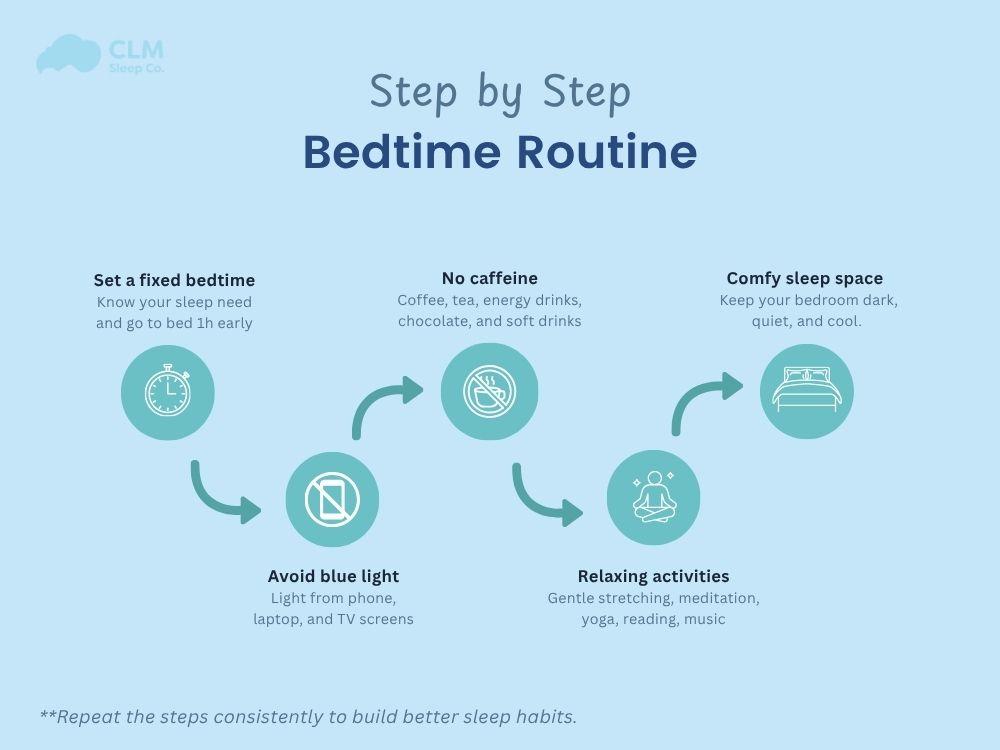
If you’re trying to understand how to get better sleep, start with habits that you can maintain consistently rather than looking for a quick solution that works for one night.
A consistent daily schedule can also make healthy sleep habits easier to maintain. If you’re trying to organize your sleep, meals, exercise, and other healthy habits into a routine, see our guide on Build a Daily Routine for Health & Wellness.
Keep a Consistent Sleep Schedule
Try to go to bed and wake up at approximately the same time each day, including weekends.
Your body has an internal timing system that helps regulate your sleep-wake cycle. Keeping a consistent wake-up time can help reinforce this rhythm.
For example, if you wake up at 7 a.m. on weekdays but sleep until noon every Sunday, your schedule can become more difficult to maintain.
You don’t need a perfect schedule. The goal is to create a routine that is realistic enough to follow most days.
If you’re changing your sleep schedule, give your body time to adjust rather than expecting a single night to solve the problem.
Create a Relaxing Bedtime Routine
Going directly from work, studying, gaming, or scrolling through social media into bed doesn’t give your mind much time to slow down.
Instead, create a short wind-down period before bedtime.
You could:
- Take a warm shower
- Read a physical book
- Listen to calm music
- Do gentle stretching
- Practice slow breathing
- Write down tomorrow’s tasks
- Dim the lights around your home
The purpose isn’t to find a magical activity that makes you fall asleep instantly. It is to create a predictable transition between your active day and bedtime.
Make Your Bedroom Sleep-Friendly
Your bedroom should make sleeping easier rather than encourage you to stay awake.
Try to keep your sleeping environment:
- Dark
- Quiet
- Comfortable
- At a comfortable temperature
- Free from unnecessary distractions
If outside light enters your room, blackout curtains or an eye mask may help. If noise is a problem, earplugs or consistent background noise may be useful.
Your mattress, pillow, bedding, and room temperature can also affect comfort. Physical discomfort can make it harder to fall asleep or remain asleep.
Limit Screens and Bright Light Before Bed
Using your phone in bed can keep your mind engaged when you’re trying to wind down. Bright light in the evening can also interfere with the signals that help regulate your sleep-wake rhythm.
Try creating a screen-free period before bed.
If completely avoiding your phone isn’t realistic, reduce stimulating content and avoid turning your bed into a place for prolonged scrolling.
Instead of watching short videos until you feel tired, try reading, listening to calm audio, or preparing your clothes and tasks for the following morning.
Avoid Caffeine Too Close to Bedtime
Coffee isn’t the only source of caffeine. Tea, energy drinks, cola, chocolate, and some other products can contain caffeine as well.
Caffeine can make it harder to fall asleep, particularly when consumed later in the day.
If you’re regularly struggling with sleep, try moving your last caffeinated drink earlier rather than continually using caffeine to compensate for daytime tiredness.
Your sensitivity to caffeine can vary, so pay attention to how your own body responds.
Exercise Regularly, But Time It Wisely
Regular physical activity can support healthy sleep, but the timing of exercise may matter for some people.
If an intense workout immediately before bed leaves you feeling energized, try finishing your workout earlier.
On the other hand, gentle stretching or relaxed movement may fit comfortably into an evening routine.
The goal is not to avoid evening exercise completely. Instead, notice whether your workout timing affects your ability to wind down.
Regular exercise can be especially useful as part of a broader strategy for how to get better sleep, because it supports both physical health and a consistent daily routine.If you’re new to exercise and aren’t sure which type of workout is right for you, our beginner’s guide to all types of workouts can help you get started.
Manage Stress Before Bed
Sometimes your body is tired but your mind is still active.
You might start thinking about tomorrow’s work, an upcoming exam, money, family responsibilities, or everything you didn’t finish during the day.
Instead of trying to force yourself to stop thinking, give your mind a structured way to wind down.
Try writing down:
What is worrying me?
What can I do about it tomorrow?
What doesn’t need to be solved tonight?
Slow breathing, meditation, gentle stretching, or progressive muscle relaxation may also help you transition into a calmer state before bed.
How Much Sleep Do You Need?
The amount of sleep you need changes throughout life.
Most adults generally need around 7–9 hours of sleep per night, although individual needs can vary. Children and teenagers usually require more sleep than adults.
However, the number of hours isn’t the only thing to consider.
If you’re regularly sleeping for seven or eight hours but still feel exhausted, ask yourself:
- Are you waking repeatedly?
- Do you snore heavily?
- Do you wake feeling unrefreshed?
- Are you excessively sleepy during the day?
- Is your sleep schedule constantly changing?
- Are you spending enough time in bed?
Sleep quantity and sleep quality both matter when considering how to get better sleep. Sleep needs vary by age, and the American Academy of Sleep Medicine provides recommended sleep durations for different stages of life.
How Does Nutrition Affect Sleep Quality?
Your eating and drinking habits can influence sleep, particularly when certain foods and drinks are consumed close to bedtime.
Caffeine
Coffee, tea, energy drinks, cola, and other caffeinated products can interfere with sleep when consumed too late.
If you’re sensitive to caffeine, you may need to stop consuming it earlier in the day.
Alcohol
Alcohol may make some people feel sleepy initially, but it can interfere with normal sleep patterns later in the night.
Using alcohol regularly as a sleep aid isn’t a healthy long-term strategy.
Heavy Meals Before Bed
A very large or heavy meal shortly before lying down can cause discomfort and make falling asleep harder.
If you’re genuinely hungry before bed, a small snack may be more comfortable than eating a very large meal immediately before sleeping.
Overall Diet
There isn’t one magical food that guarantees better sleep.
Your overall eating pattern matters more than a single “sleep food.” A balanced diet that provides adequate nutrients supports general health and can fit naturally into a healthy sleep routine.
Hydration
Being very thirsty can disturb sleep, but drinking a large amount of fluid immediately before bed may cause repeated trips to the bathroom.
Instead, stay adequately hydrated throughout the day and adjust your evening fluid intake according to your needs.
Health Benefits of Better Sleep
Improving your sleep can affect several areas of your life.
Better sleep can support:
- Energy: You may feel more alert during the day.
- Mood: Adequate sleep supports emotional well-being.
- Concentration: Quality sleep supports attention and cognitive function.
- Memory: Sleep contributes to learning and memory processes.
- Physical recovery: Your body gets time to recover from daily activity and exercise.
- Daily performance: Being rested can make everyday activities easier.
This is why how to get better sleep isn’t just a question about bedtime. It is part of maintaining a healthy lifestyle, alongside regular physical activity and a balanced diet. Good-quality sleep supports healthy brain function and physical health, making it an important part of overall well-being.
Signs You May Not Be Getting Good Sleep
You may need to take a closer look at your sleep habits if you regularly:
- Take a long time to fall asleep
- Wake up repeatedly during the night
- Wake much earlier than planned
- Feel tired despite spending enough time in bed
- Struggle to concentrate during the day
- Feel unusually sleepy during daytime activities
- Depend heavily on caffeine to stay awake
- Wake up feeling unrefreshed
One or two poor nights don’t necessarily indicate a serious problem.
However, if these symptoms happen regularly or interfere with your work, studies, relationships, exercise, or daily activities, consider speaking with a healthcare professional.
Common Sleep Disorders
Not every sleep problem can be solved through better sleep hygiene.
Insomnia
Insomnia involves ongoing difficulty falling asleep, staying asleep, or getting restorative sleep despite having an opportunity to sleep.
Stress, lifestyle factors, medications, mental health conditions, and other health conditions can contribute to insomnia.
Sleep Apnea
Sleep apnea is a condition in which breathing repeatedly stops or becomes restricted during sleep.
Loud snoring, pauses in breathing, gasping during sleep, and excessive daytime sleepiness can be warning signs that deserve medical attention.
Restless Legs Syndrome
Restless Legs Syndrome can cause uncomfortable sensations in the legs and a strong urge to move them, particularly when you’re resting or trying to sleep.
These are only a few examples of sleep disorders. Persistent symptoms shouldn’t simply be treated as a lack of discipline or poor sleep hygiene.
These are only a few examples of sleep disorders, and different conditions can have different symptoms, causes, and treatment approaches. If you regularly experience sleep problems, speaking with a healthcare professional can help determine whether an underlying sleep disorder may be involved.
Sleep Myths and Facts
Myth: Everyone needs exactly 8 hours of sleep.
Fact: Sleep needs vary between people and change with age. Most adults need around 7–9 hours, but there isn’t one exact number that works for everyone.
Myth: You can completely make up for lost sleep on weekends.
Fact: Sleeping longer after several short nights may help reduce tiredness, but regularly changing your sleep schedule can make it harder to maintain a consistent sleep-wake rhythm.
Myth: Watching TV in bed helps everyone fall asleep.
Fact: Some people may find television relaxing, but screens and stimulating content can also keep you mentally engaged. A calmer bedtime routine may be more helpful.
Myth: Snoring is always harmless.
Fact: Occasional snoring isn’t necessarily a sign of a serious problem. However, loud or persistent snoring combined with pauses in breathing, gasping, or excessive daytime sleepiness can be associated with sleep apnea.
Frequently Asked Questions About Better Sleep
How can I fall asleep faster?
Start by making your bedroom comfortable, maintaining a consistent sleep schedule, reducing stimulating activities before bed, and giving yourself enough time to relax.
Don’t turn falling asleep into a competition. Worrying about how quickly you must fall asleep can increase frustration and make relaxation more difficult.
How to sleep fast in 5 minutes?
There is no scientifically guaranteed method that makes everyone fall asleep within five minutes.
You may see techniques online that promise extremely fast sleep, but falling asleep depends on several factors, including your sleep drive, stress level, environment, schedule, caffeine intake, and health.
Instead of trying to force yourself to fall asleep within five minutes, focus on creating conditions that make sleep more likely.
Dim the lights, put away stimulating devices, relax your body, slow your breathing, and allow yourself to become sleepy naturally.
How to sleep in 2 minutes?
The idea of learning how to sleep in 2 minutes is popular online, but there isn’t a reliable technique that guarantees everyone will fall asleep within two minutes.
Trying to meet a strict two-minute target can actually make you more focused on whether you’re asleep yet.
A better approach is to reduce stimulation, relax your body, and allow sleep to happen naturally.
How can I sleep better naturally?
If you’re looking for how to get better sleep naturally, start with the basics:
- Keep a consistent sleep and wake schedule.
- Create a relaxing bedtime routine.
- Make your bedroom dark, quiet, and comfortable.
- Limit screens and stimulating activities before bed.
- Avoid caffeine late in the day.
- Exercise regularly.
- Manage stress before bedtime.
These habits work best when practiced consistently rather than only on nights when you have trouble sleeping.
What should I do if I wake up during the night?
Don’t immediately panic about losing sleep.
Keep the room dark and avoid repeatedly checking your phone or the clock. If you’re awake for a prolonged period and becoming frustrated, getting out of bed and doing something quiet and relaxing before returning when you’re sleepy may be helpful.
How many hours of sleep do I need?
Most adults need around 7–9 hours per night, while children and teenagers generally need more.
Individual needs vary, so consider both how long you sleep and how rested and alert you feel during the day.
Does exercise help you sleep better?
Regular exercise can support healthy sleep. However, some people find that vigorous exercise immediately before bedtime makes them feel more alert.
If late workouts interfere with your sleep, consider exercising earlier in the day.
What foods are good before bed?
There isn’t one food that guarantees better sleep.
If you’re hungry before bed, a small and comfortable snack may be appropriate. Very heavy meals, alcohol, and late caffeine may interfere with sleep for some people.
When should I see a doctor about sleep problems?
Consider speaking with a healthcare professional if your sleep problems persist, significantly affect your daytime functioning, or occur alongside symptoms such as loud snoring, breathing pauses, gasping during sleep, or excessive daytime sleepiness.
Conclusion
If you’re searching for how to get better sleep, don’t feel that you need to completely change your life overnight.
Start with the habits that have the biggest practical impact: maintain a consistent sleep schedule, create a relaxing bedtime routine, make your bedroom comfortable, reduce evening screen exposure, monitor your caffeine intake, exercise regularly, and manage stress before bed.
Then look at the bigger picture. Are you getting enough sleep? Is your diet supporting your routine? Are you waking repeatedly? Do you feel exhausted even after spending enough time in bed?
Better sleep is usually built through consistent habits rather than one quick trick. And if persistent sleep problems are affecting your daily life, don’t assume that you simply need more discipline. Some sleep problems require professional evaluation and treatment.
The most useful answer to how to get better sleep is therefore not a single technique. It’s a sustainable routine that supports your body and mind every day.